
Keywords
cancer screening
fecal occult blood test
colonoscopy
Abstract
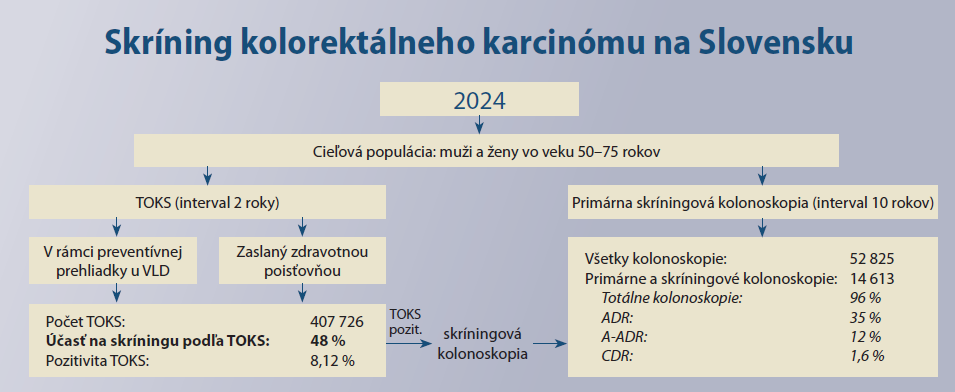
Colorectal cancer (CRC) is one of the most common oncological diseases worldwide. The Slovak Republic ranks among the countries with high incidence of this malignancy. Organized screening reduces both the incidence and mortality of colorectal cancer. In recent years, a decline in age-standardized incidence and mortality rates has been observed in Slovakia. Colorectal cancer screening in Slovakia began in 2004. Since 2021, an active invitation system has been introduced, targeting individuals from the eligible population who have not participated in screening within the past two years. The target population for CRC screening in Slovakia includes individuals aged 50 to 75 years who are at average risk for the disease. Screening is performed either by a biennial immunochemical fecal occult blood test (FIT) in the general practitioner’s office or by a primary screening colonoscopy once every 10 years. Since the implementation of the active invitation system, there has been an increase in the number of FITs performed, as well as in the number of both screening and diagnostic colonoscopies in the target population. The most significant challenge of the CRC screening program in Slovakia is the lack of relevant data to assess its effectiveness and quality assurance.