
Keywords
adherencia pacienta
bezlepková diéta
problémy pri rešpektovaní bezlepkovej diéty
nákup bezlepkových potravín
príprava bezlepkových potravín
stravovanie s rodinou, priateľmi
Abstract
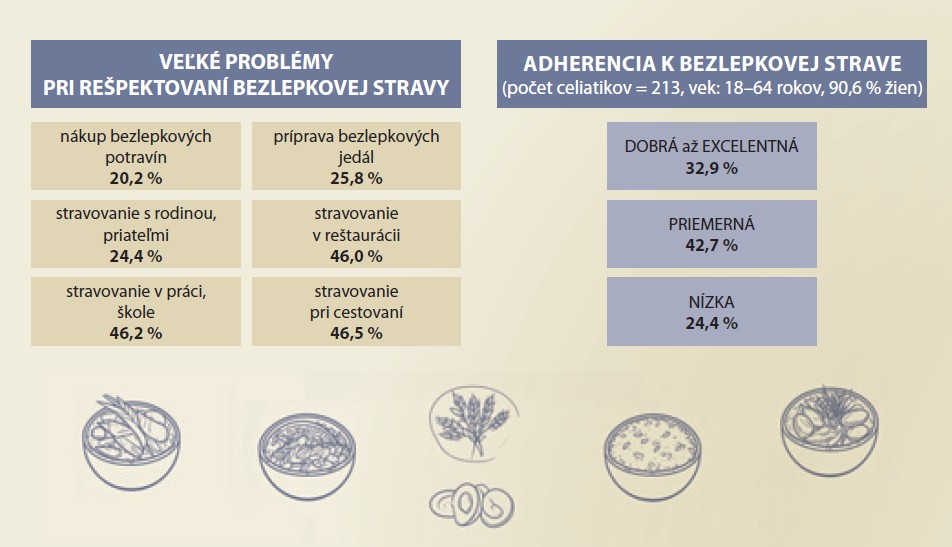
Background: Celiac disease is a serious autoimmune disease that develops in genetically predisposed individuals after consuming gluten. The only treatment is strict adherence to a gluten-free diet. Since gluten is a component of many foods, meals, semi-finished products and beverages, respecting the principles of a gluten-free diet (GFD) is a challenge for many celiac patients. Aim: The aim of the research was to assess adherence to GFD in adult patients with celiac disease in the Slovak Republic and to assess the influence of selected factors on adherence. Methods: The sample consisted of 213 celiac patients with a mean age of 38 years, where 90.6% were women. Adherence was assessed using the Celiac dietary adherence test (CDAT). We also assessed the incidence of problems with adherence to BD, intensity of discomfort after consuming gluten, and the fear of complications related to gluten intake. Results. The mean CDAT score was 14.78 (SD 4.34, range 7– 29). Good adherence was found in 32.9% of celiac patients, average in 42.7%, and poor in 24.4%. Celiac patients have the greatest problems with respecting GFD when eating in restaurants, at work/ school, and when traveling. Problems with purchasing gluten-free foods (P = 0.017), preparation of gluten-free meals (P = 0.049), and eating with family and friends (P = 0.004) are associated with adherence. Also, a higher intensity of problems after consuming gluten (P = 0.008) and a greater fear of developing complications (P = 0.000) are associated with adherence. Conclusion: Strengthening skills in selecting, purchasing, and preparing gluten-free meals by healthcare professionals and dietitians, as well as increasing awareness of GFD among the general public, can reduce the perception of problems and improve adherence to the diet.