
Keywords
inflammatory bowel disease
endoscopic follow-up
colorectal cancer
dysplasia
Abstract
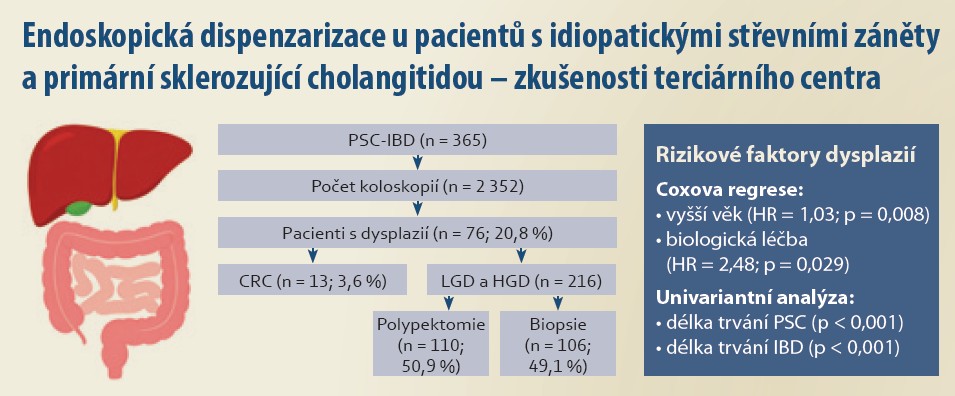
Introduction: Patients with primary sclerosing cholangitis (PSC) associated with inflammatory bowel disease (PSCIBD) are at increased risk of colorectal neoplasia. The aim of this study was to assess the incidence of colorectal neoplasia and identify risk factors for their development during long-term endoscopic surveillance in a tertiary center. Methods: This retrospective study included 365 patients with PSC-IBD who were followed between 2007 and 2025, and underwent a total of 2,352 colonoscopies. Demographic and clinical data, endoscopic findings, and histological results were analyzed. Risk factors for dysplasia and carcinoma were assessed using a time-dependent Cox regression model. Results: Dysplasia was detected in 76 patients (20.8%), with a neoplasia detection rate of 9.18%. A total of 216 dysplastic lesions were identified (50.9% from polypectomies and 49.1% from biopsies). Adenocarcinoma was diagnosed in 13 patients (3.6%). Statistically significant risk factors included higher age (HR = 1.03; P = 0.008), biologic therapy (HR = 2.48; P = 0.029), and disease duration (P < 0.001). The Mayo endoscopic subscore showed a positive trend toward significance (HR = 1.27; P = 0.051). Conclusion: Our study confirms the high risk of colorectal neoplasia in patients with PSC-IBD, particularly in older individuals, those with longer disease duration, and those receiving biologic therapy. It highlights the importance of annual surveillance colonoscopies with both targeted and random biopsies.